AI & Automation
A curated anthology of the best moments on this topic — drawn from across the full video library, ranked by editorial relevance, with direct links to the exact timestamp in every source session.
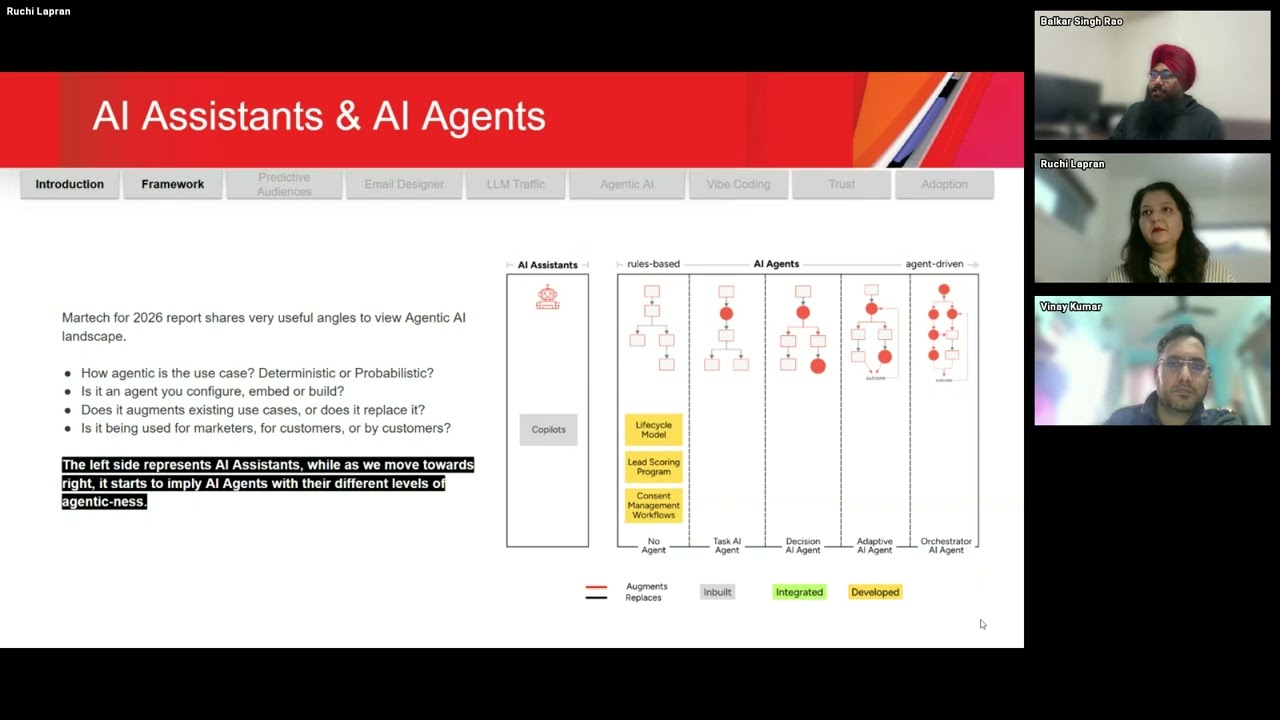
If your team is manually cleaning field values or translating system errors into human-readable notes, this webhook-to-LLM pattern likely applies to your instance today. The architecture is more reusable than it first appears — understanding the meta-workflow unlocks a long list of data quality applications.
Watch full session ↗A Marketo Webhook-to-LLM Pattern That Turns Lead Data Into a Reusable Data Cleaning EngineA practitioner demonstrated a meta-workflow architecture in which Marketo sends lead field data via webhook to an intermediary layer — either custom code or a no-code automation platform — which constructs a dynamic prompt, calls an LLM, and writes the response back to the lead r
LLM Referral Traffic Is Already Trackable in Marketo Smart Lists — And It Signals Higher IntentA practitioner shared a low-effort tactic for identifying leads who arrived via AI-powered chat interfaces: tools like ChatGPT and Perplexity automatically append UTM source parameters to outbound links, meaning clicks from within an active chat session can be captured using a st

If you've avoided velocity scripting because writing Velocity code felt out of scope, this workflow removes that barrier entirely. The one non-obvious admin step — checking the field inside the token editor — is what separates a working script from a silent failure.
Watch full session ↗Use Field API Names in AI Prompts to Generate Velocity Scripts Without Writing CodeA practitioner demonstrated a repeatable workflow for building Marketo velocity scripts using an AI assistant: pull the field's API name directly from Marketo's Field Management admin panel, paste it into a structured prompt, and the generated script is ready to drop into an emai
Velocity Scripting as a Complement to Segmentation: When and Why to Reach for ItA presenter laid out the core conceptual case for email velocity scripting as a distinct tool from segmentation, focusing on the categories of data problems it solves better. The key differentiator is that velocity scripting evaluates logic at send time against live field data, w
Guardrails for Velocity Scripting: Testing Behavior, Template Risks, and Where Segmentation Still WinsQ&A from the session surfaced several practical guardrails that don't appear in introductory coverage of velocity scripting. On testing: scripts do render in the email preview using live record data, which makes preview a valid first-pass test. However, a practitioner recommended

Keyword-based persona matching is a well-known source of silent data quality degradation in lead scoring — these patterns show how a webhook layer converts that structural weakness into a solved problem. If you're still maintaining long lists of title-contains filters, this approach is worth evaluating.
Watch full session ↗Webhook-to-LLM Patterns Unlock Fuzzy Matching, Form Classification, and Conversational RevOps in MarketoA practitioner demonstrated how calling an external LLM via webhook enables job-title-to-persona mapping that rule-based keyword filters cannot reliably achieve. The core problem with conventional approaches — keyword matching producing false positives across similar-sounding but
Layered Bot Defense: Combining Marketo's Native Settings, reCAPTCHA Limitations, and LLM Form Submission FilteringA recurring theme across the discussion was that no single bot mitigation technique is sufficient, and that each layer has identifiable failure modes. The IAB bot list combined with proximity pattern detection — flagging email opens and clicks occurring within a configurable time
Execute Campaign vs. Request Campaign: The Token Context Flag That Changes Modular Flow DesignA practitioner walked through the operational distinction between Execute Campaign and Request Campaign, focusing on the sequencing behavior difference that determines which to use in modular campaign architecture. When a flow contains multiple Request Campaign steps, those child
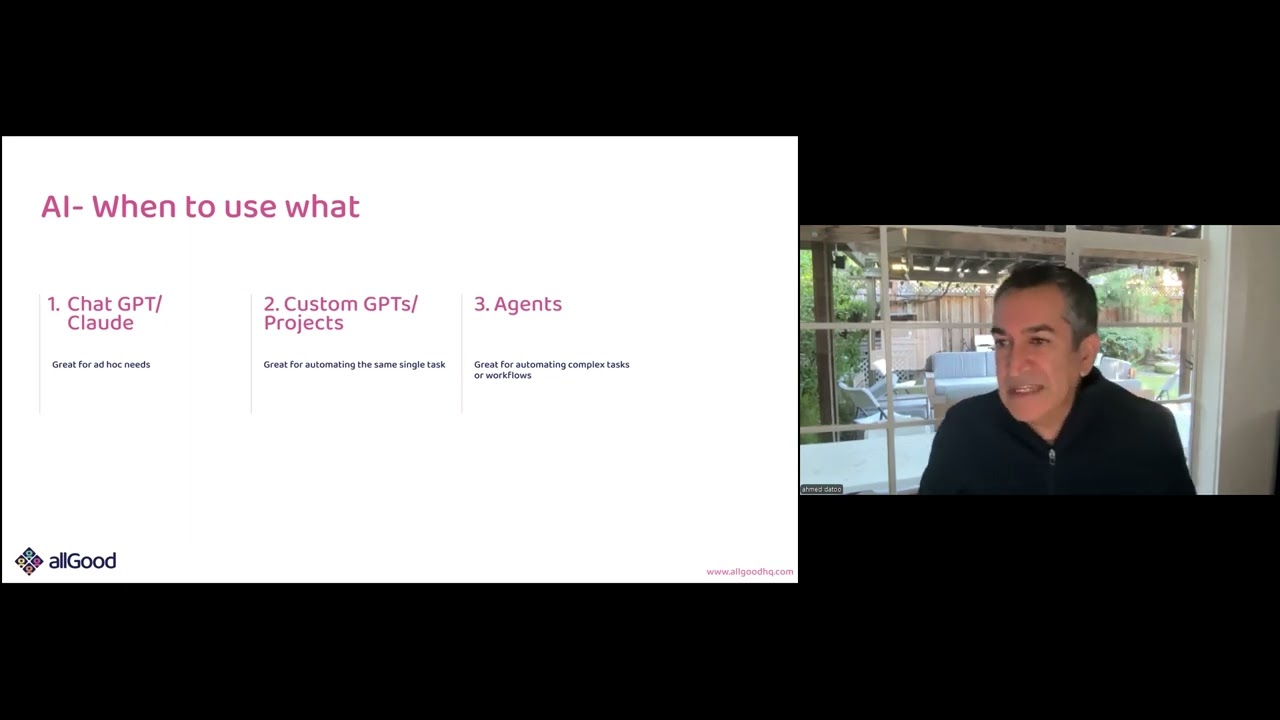
If your team is still debating whether to use AI for marketing operations tasks, the more productive question is which tool tier fits the task. This framework gives you a repeatable way to answer it.
Watch full session ↗Two Techniques for Managing LLM Accuracy and PII Risk in Marketo Data Cleaning WorkflowsA Q&A exchange surfaced two high-value operational techniques for teams facing blockers on LLM-based data cleaning. On PII, the approach shared was to strip personally identifiable fields — name, email — from the spreadsheet before upload, retaining only the Marketo ID and the fi
LLM-Based Job Level Classification Replaces Brittle Smart-List Keyword Rules — and Handles Titles Your Rules Never WillA practitioner made a direct case for replacing keyword-based Marketo smart-list job level classification with LLM-based categorization, demonstrating Claude classifying translated job titles into five configurable job level categories. The fundamental argument is maintainability
Translating Non-English Job Titles Before Lead Scoring Prevents Silent Lead Loss in International ProgramsA presenter demonstrated using an LLM-based project to translate non-English job titles — including French, Japanese, and Chinese — into English as a prerequisite step before lead scoring or job level classification. The core problem framed is that keyword-based scoring and routi
Chaining Data Cleaning Steps into a Single Agent Pipeline That Writes Directly to Marketo via APIA practitioner demonstrated a LangChain-based agent pipeline that sequences all four data cleaning operations — country code standardization, phone normalization, job title translation, and job leveling — and concludes by calling the Marketo API to upload the cleaned list directl
Normalizing International Phone Numbers to E.164 via Custom GPT — Including Invalid Number DetectionA practitioner demonstrated a custom GPT configured to normalize international phone numbers to the E.164 standard, producing a new column on the input spreadsheet with reformatted values. The demo surfaced a practically important behavior: rather than silently reformatting or dr
Using Custom GPTs with Reference Data to Standardize Country Codes on Inbound Lead ListsA practitioner demonstrated loading ISO country code reference data directly into a custom GPT so that any uploaded lead list — from trade shows, content syndication, or partner uploads — automatically receives a standardized two-letter country code column. The key design detail
If your team has been waiting for a lower-friction entry point to Marketo API automation, this deployment pattern reduces the setup to credential entry and a few button clicks — before you ever touch a line of code.
Watch full session ↗A Two-Layer Test Framework for Validating All Marketo MCP Tool Calls Before ProductionA practitioner shared a structured pre-deployment validation approach for a Marketo MCP server: test the underlying API functions directly first, then test the same operations through the MCP abstraction layer. This two-layer sequencing matters because the MCP server is a wrapper
Three Marketo MCP Use Cases: Personal Campaign Assistant, ICP Scoring Agent, and Slack-Based MQL TriageA practitioner walked through three concrete use cases for a Marketo MCP server, each representing a different point on the complexity and integration spectrum. The first is a personal campaign operations assistant running in a desktop AI client, configured with persistent memory
Extending a Marketo MCP Server with New API Tools Using AI-Generated Code from Official DocsA practitioner demonstrated a repeatable workflow for adding new Marketo API capabilities to an existing MCP server: copy the relevant section of the official API documentation, paste it into an AI assistant with a prompt requesting both a new Marketo function and its correspondi
Role-Based Access Control, Cross-Platform MCP Patterns, and Debugging Marketo-to-Salesforce HandoffsA Q&A session surfaced several practical considerations for teams evaluating or extending the MCP pattern. On LLM compatibility: the MCP server design is provider-agnostic, meaning any AI model can be used as the reasoning layer. The MCP acts purely as a translation layer between
A Plug-and-Play Marketo MCP Template That Deploys in Minutes Without Writing CodeA practitioner demonstrated a pre-built Marketo MCP server template hosted on a cloud coding platform, showing that the entire deployment path — from cloning the template to executing a natural language Marketo query — requires no programming knowledge if the existing 40+ tool ca
Using a Tunneling Service to Expose a Local Marketo MCP Server for AI Agent AccessWhen running an MCP server locally during development, a practitioner demonstrated how a tunneling service bridges the gap between a laptop-hosted process and the public internet — allowing external AI providers to route tool call requests inbound. The pattern involves starting t

If your team is scoping an AI agent integration, the architecture decisions you make before touching an LLM will determine whether it works. This segment maps those decisions layer by layer.
Watch full session ↗A Practical Stack for Building AI Agents on Top of Marketo: Layers, Tools, and Where to StartA recurring pattern in early AI agent implementations is the temptation to jump directly to an LLM integration without first establishing the foundational layers that make it useful. A presenter outlined five distinct layers required for a functional agent: data access (via REST
If your team is trying to add AI validation to form submissions, you're likely hitting the same wall Max did: Marketo forces you off-platform to do it. His N8N + Claude stack is a working blueprint, but it also exposes a platform gap your roadmap conversations should account for.
Watch full session ↗N8N + Claude webhook workaround for AI validation in Marketo form submissionsMax built a homegrown integration using N8N and Claude to validate Marketo form submissions via webhook—effectively routing lead data out of Marketo, through an AI validation node, and back. He chose Claude specifically because it had a native knowledge base of N8N flow steps, me
AI-generated MQL summaries that tell sales reps why a lead qualified—built on Marketo activity dataMax built a second AI automation that triggers at MQL status change and generates a short natural-language summary for sales reps explaining why the lead hit the threshold. The summary pulls from campaign history, activity data, and account context—synthesizing it into a brief th

If your team still exports to Excel to recalculate scores or reformat field values before re-uploading, this flow step pattern removes that entire loop from your process. The round-robin and weighted composite score patterns alone are worth the 30-minute setup.
Watch full session ↗A Formula Flow Step Pattern That Eliminates Excel-Based Data Calculations in MarketoA practitioner demonstrated how a community-provided compute formula flow step — deployable via Adobe IO in roughly 30 minutes with no coding required — can replace the longstanding workaround of exporting data to Excel, calculating values, and re-importing lists. The step uses t
Self-Service Flow Steps vs. Webhooks: A Structural Comparison for Marketo PractitionersA presenter laid out a detailed architectural comparison between webhooks and self-service flow steps, moving beyond surface-level differences to highlight the failure modes that make webhooks problematic at scale. The core distinction: webhooks fire individual requests simultane
How Self-Service Flow Steps Handle API Rate Limits — and What Adobe IO Access Actually CostsA Q&A exchange surfaced a practically important architectural pattern for teams whose third-party APIs enforce rate limits. Rather than hitting an external API directly from Marketo, a middleware service can sit between the flow step and the destination API, throttling outbound r
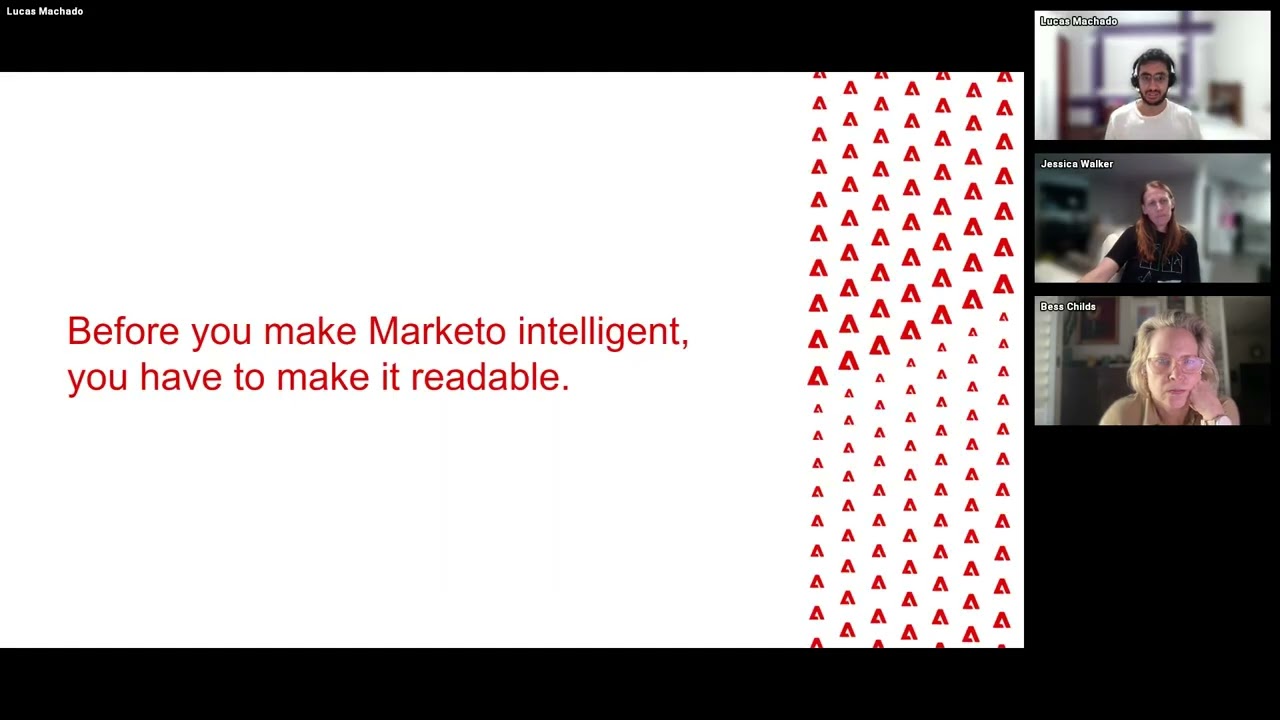
If you're planning to introduce AI agents into your instance, the navigability of your folder structure and template library is no longer just a housekeeping concern — it's a functional prerequisite. The patterns discussed here give you a concrete starting point without requiring a full remediation before you can move.
Watch full session ↗How to Make a Marketo Instance Navigable by AI Agents: REST API, Deduplication at Scale, and Munchkin DeploymentA recurring pattern in AI-ready Marketo deployments is that the instance must be navigable by a new human operator before it can be navigable by an AI agent. Practitioners discussed how AI agents interact with Marketo primarily through the REST API, which means folder structures,
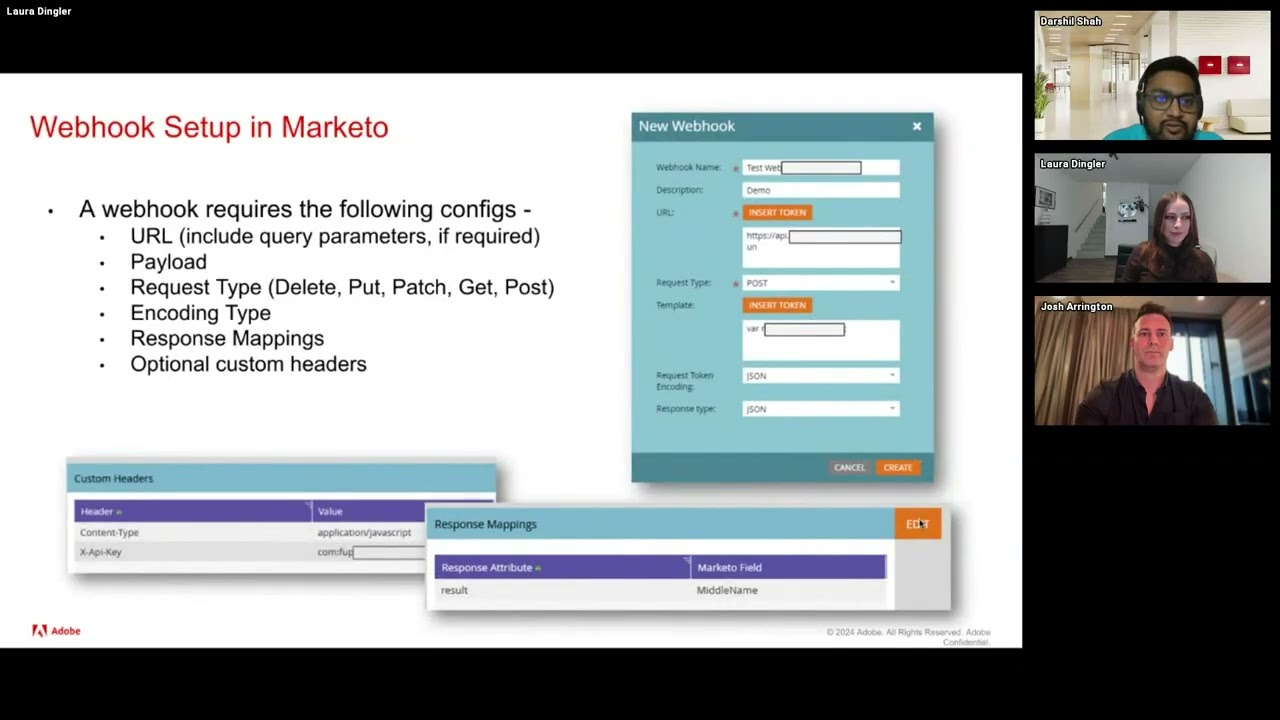
If your webhook error handling is just 'check the activity log when something breaks,' you're missing a fully buildable retry and alerting system that lives inside Marketo. The 'Webhook is Called' trigger is more powerful than most practitioners use it.
Watch full session ↗Flow step async execution, per-step activity triggers, and dynamic dropdowns — three capabilities webhooks can't replicateThree flow step capabilities with no webhook equivalent: first, async execution that holds the flow until a response returns — critical for any flow that fetches data (e.g., a member's gym activity summary) and then uses it in the next step (e.g., populating an email token). With
Self-service flow steps process 10,000 records in 10 batches — webhooks send them all at once and time outThe architectural difference between webhooks and self-service flow steps isn't cosmetic. Webhooks fire all records simultaneously and require your backend to respond within 30 seconds — for a 10,000-lead flow, every single request hits your endpoint at once. Flow steps send in b
Three build paths for self-service flow steps: Workato packaged, N8N with downloadable template, or custom code on Adobe IOBuilding a self-service flow step requires an endpoint layer that handles Marketo's callback pattern — not every integration platform supports the specific multi-endpoint structure required. Workato is the only pre-packaged solution currently available with a purpose-built flow s
Webhook error handling pattern: retry automation and static list investigation built inside MarketoThe 'Webhook is Called' trigger — combined with Response and Error Type constraints — lets you build retry logic and error recovery entirely within Marketo smart campaigns. For predictable errors (service timeouts, known failure states), you can trigger a retry flow automatically
If your spam filtering relies on reCAPTCHA v3 scores alone, you're working without explanations and without control. This pattern gives your team both.
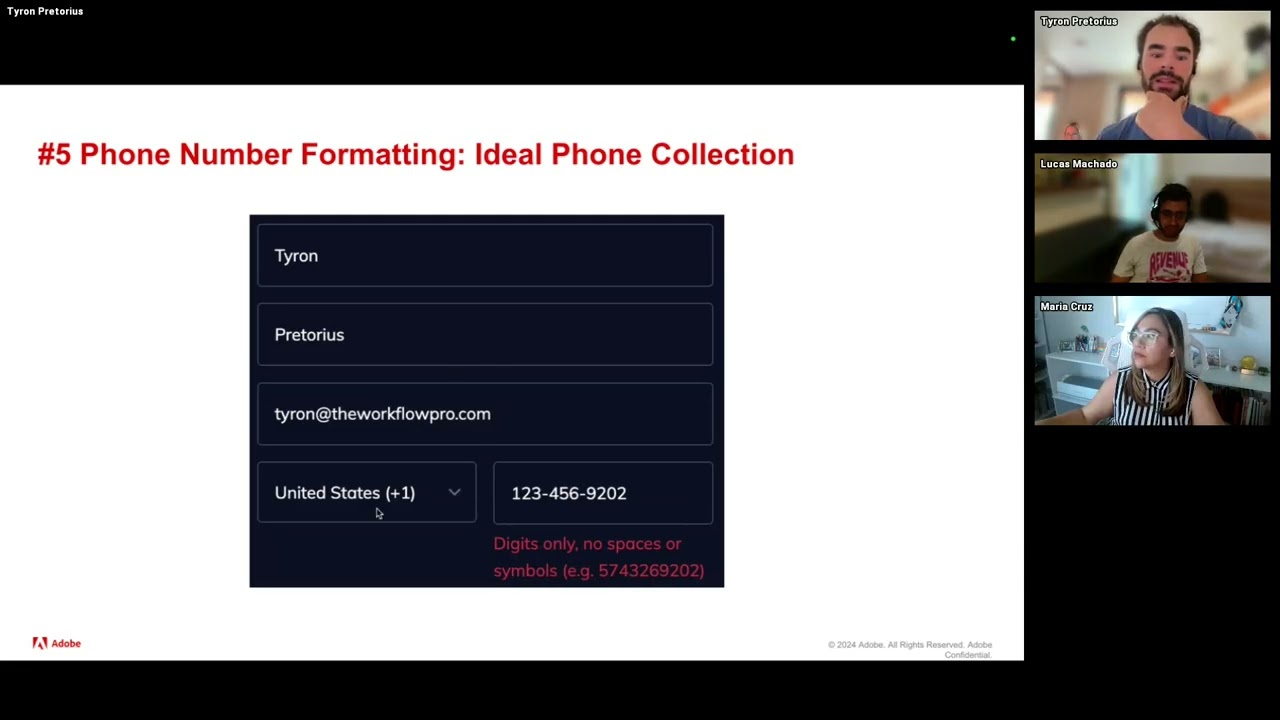
Watch full session ↗The OpenAI Batch API Cleans Historical Phone Data at Scale for Half the Cost of Real-Time ProcessingA common data quality problem in mature Marketo instances is a large inventory of phone numbers collected through open text fields over many years — inconsistent formatting, mixed special characters, no country code standardization. A practitioner presented an end-to-end workflow
Q&A Roundup: CRM Sync Throttling, Model Selection, Spam Workflows, and How AI Changes Marketo Best PracticesA dense Q&A session surfaced several high-value practitioner insights. On the ChatGPT Pro vs. Batch API question: uploading a large spreadsheet to the ChatGPT interface causes the model to generate code to analyze the data in bulk rather than reasoning about each record individua
Lexical Rules Fail for Job Title Segmentation — AI Handles Misspellings, Multilingual Values, and Edge Cases ReliablyJob title-based persona segmentation using 'contains' logic is a well-known fragility point. A practitioner illustrated why with a concrete failure case: a multilingual instance where the French word for training or education caused IT contacts to be systematically misclassified
Open-Text Attribution Fields Reveal New Marketing Channels — If You Can Parse Them at ScaleA common pattern in attribution reporting is to offer a dropdown of known channels, which by design can only confirm what you already know. A practitioner shared an alternative approach: leaving the 'how did you hear about us?' field as open text, then using AI to categorize resp
Webhooks vs. Self-Service Flow Steps: Choosing the Right Real-Time AI Architecture for MarketoOnce historical data is cleaned via batch processing, the ongoing challenge is keeping new records clean in real time. A practitioner laid out two architectural options for real-time AI processing in Marketo. Webhooks execute within Marketo — they're straightforward to configure,
AI Form Classification Outperforms reCAPTCHA by Making Spam Decisions ExplainableA recurring limitation with reCAPTCHA v3 in Marketo is that it operates as a black box — returning a suspicion score with no explanation, and doing so unreliably in both directions. A practitioner demonstrated using an AI agent instead, where a custom prompt defines exactly what